

A story about more than a cellar
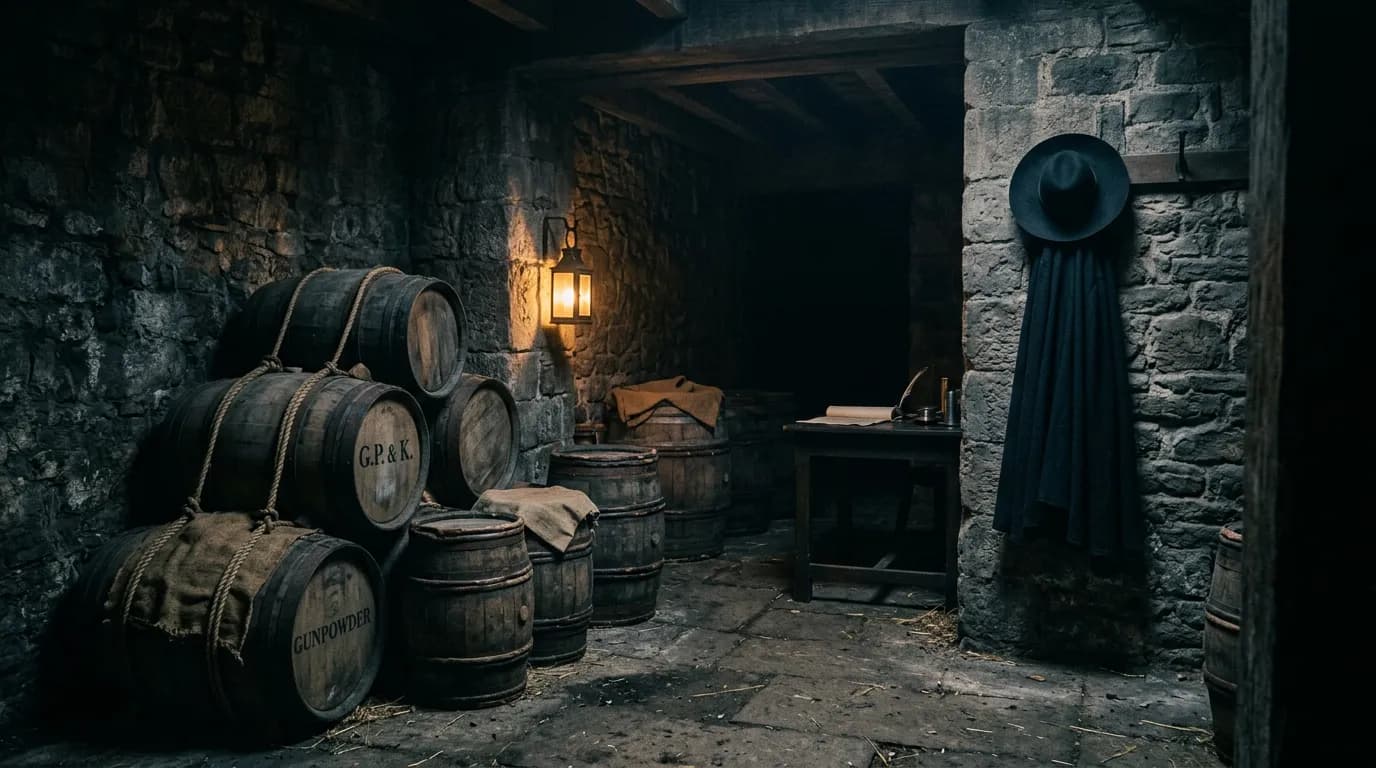
Every 5th November, Britain lights bonfires, watches fireworks and remembers that Guy Fawkes was found beneath the House of Lords with 36 barrels of gunpowder. The familiar story is simple: a man was caught, a plot failed and Parliament survived. The real story is more revealing. The Gunpowder Plot was a recruitment exercise that assembled people around a grievance, selected a specialist for a particular capability, relied on trust instead of challenge and failed to test whether the people involved could be trusted with the consequences of what they had agreed to do.
This is not an attempt to turn a terrorist conspiracy into a management parable. The plotters planned mass murder and the destruction of the political leadership of England. The human cost they intended would have been appalling. But history is useful partly because it lets us examine failure at a safe distance. If an organisation recruits people into a mission without testing judgement, character, motivation and the ability to challenge a bad idea, it is taking a risk that no impressive CV can remove.
The comparison is also limited. A 17th century conspiracy was not a company, and a modern employer is not a government trying to prevent treason. What connects them is the human process: who gets invited in, what they are told, what they are not asked, and what happens when a group becomes more loyal to itself than to the people it is meant to serve.
The background: faith, fear and a closed system
The plot grew out of the religious conflict of Tudor and Stuart England. The English Reformation had separated the Church of England from Rome, and Catholics faced periods of persecution, fines and restrictions. Under Elizabeth I, recusants who refused to attend Church of England services could be fined. The accession of James I in 1603 raised hopes among some English Catholics that policy might soften. When those hopes faded, a small group decided that a violent act could force a political change.
That context matters because recruitment rarely begins with a job description. It begins with a story about what is wrong and who is to blame. Robert Catesby, the plot’s organiser, was a Catholic gentleman from Warwickshire who had already taken part in the Essex Rebellion of 1601. He had experience of opposition, a network of family and friends and a strong belief that extraordinary action was justified.
The group’s first members were not strangers selected from an open field. Thomas Wintour, John Wright, Thomas Percy and Thomas Wintour’s brother Robert were connected through religion, family and existing trust. Catesby recruited people who already shared his world view. That made the early conversations easier, but it also created the first structural weakness. There was no independent person in the room whose role was to ask whether the plan was realistic, lawful or morally defensible.
The recruitment lesson is uncomfortable. Shared values can help people work together, but shared values without challenge can become an echo chamber. A team made entirely of people who already agree may feel aligned while becoming less capable of spotting a dangerous assumption.
Why Guy Fawkes was recruited
Guy Fawkes was not the leader of the plot. He was recruited because he brought a capability the others did not have. Born in York around 1570, he converted to Catholicism as a young man and travelled to the Spanish Netherlands, where he served as a soldier in the army of Spain against the Dutch Protestant forces. He acquired military experience and knowledge of gunpowder and explosives.
Thomas Wintour met Fawkes abroad while seeking Spanish support for English Catholics. That mission failed, but Wintour returned to England with someone who could perform a specialist task. Catesby brought Fawkes into the conspiracy in May 1604. Fawkes used the name John Johnson while working as the servant of Thomas Percy, and his experience abroad meant he was less familiar to the authorities in London than the English plotters were.
From a recruitment perspective, this was a classic specialist hire with none of the controls that should accompany one. The plotters identified a technical skill, checked that Fawkes had the experience they needed and used his distance from local scrutiny as an advantage. They did not appear to test whether he would challenge the plan, whether his judgement matched the responsibility he was being given or whether he understood the likely effect on civilians and the country around him.
A capability is not a character reference. Someone can be technically excellent and still be the wrong person for a mission. The more sensitive the work, the less acceptable it is to recruit on skill alone.
How the plot was built
The plot was first discussed by a small group in 1604. The conspirators rented a house close to Parliament and later took a cellar beneath the House of Lords. Their plan was to place gunpowder there and destroy the King, the royal family, bishops, judges and members of both Houses at the State Opening of Parliament on 5th November 1605.
There were 13 men involved in the final conspiracy, although not all joined at the same time or understood every detail from the beginning. The group grew through personal introductions and existing relationships. Robert Keyes, Thomas Bates, Christopher Wright, Robert Wintour, John Grant, Ambrose Rookwood and Sir Everard Digby joined the core plot. The number itself is less important than the method. People were brought in through trust networks, not through a process that tested the plan from different perspectives.
The plot also depended on secrecy. Secrecy is sometimes necessary in security work, but it removes many of the safeguards that make ordinary decisions better. There was no open debate, no external review, no written risk assessment and no independent investigation of the claims being made by the leader. The group’s loyalty became part of its operating model.
That is how bad recruitment can become dangerous. A poor appointment does not always fail on the first day. It can create a new person who repeats the founder’s assumptions, strengthens the internal story and makes the next appointment on the same basis. Over time, a team can become harder to question precisely because everyone inside it has been selected for agreement.
The warning and the failure of the plan
The plot was exposed by a letter sent to Lord Monteagle on 26th October 1605. The writer warned him to avoid the opening of Parliament and referred to a great blow. The letter was passed to Robert Cecil, the King’s principal secretary. Searches were made, but it was not until the early hours of 5th November that Sir Thomas Knyvet and his men searched the undercroft beneath the House of Lords and found Fawkes with the gunpowder. He was arrested using the name John Johnson.
The plotters had selected someone for technical expertise, but their operational controls were weak. They had not secured a reliable escape plan, they had not agreed how to manage the wider consequences and they had underestimated the possibility that someone close to them would hesitate. Guy Fawkes was caught before the plan reached its intended stage. The gunpowder was also old and, according to later analysis, may not have been in a condition to produce the destruction the conspirators expected, although it would still have been lethal in the confined space.
The warning letter is also a lesson in the value of a route for raising concerns. The letter may have been written by Francis Tresham, although his authorship has never been proved. Whoever wrote it, the information reached someone outside the conspiracy and was acted upon. A serious organisation needs a way for people to challenge a decision without having to become part of the problem or risk their entire identity to be heard.
The historical response: from personal loyalty to formal tests
The immediate response was punishment. Fawkes and the surviving plotters were tried for high treason. Guy Fawkes, Thomas Wintour, Ambrose Rookwood and Robert Keyes were executed at Westminster on 31st January 1606. Robert Catesby, Thomas Percy and John Wright had already been killed at Holbeche House in Staffordshire on 8th December 1605 after a confrontation with the authorities. The plot was not treated as a disagreement at work. It was an attempt to destroy the government and was answered with the full force of the treason law.
The longer response was a new focus on identification, loyalty and the management of perceived risk. Parliament passed the Popish Recusants Act 1606 and the Act to Prevent and Avoid Dangers Which May Grow by Popish Recusants. The legislation tightened penalties on Catholics who refused to conform and required an Oath of Allegiance that denied the Pope’s authority to depose the King. Catholics were not simply assessed on what they could do. The state attempted to test where their ultimate loyalty lay.
This approach had a damaging side. It treated religious identity as a proxy for dangerousness and placed a whole community under suspicion because of the actions of a small group. It was a blunt instrument, and it contributed to discrimination that lasted for generations. That is an important warning for modern employers. Risk controls should test relevant behaviour and capability, not use a broad identity as a shortcut for judgement.
The annual commemoration was established through the Observance of 5th November Act 1605, passed in 1606. For centuries, people attended church and gave thanks for the King’s survival. Bonfires, fireworks and the burning of effigies became part of the tradition. The event moved from an immediate state celebration into a public ritual that has changed meaning over time. Today it is as much about community, firework safety and history as it is about the politics of James I’s reign.
The recruitment mistakes
The first mistake was recruiting for capability without testing judgement. Fawkes was chosen because he knew how to handle explosives. That did not make him suitable to decide whether the mission itself was right. In a business, the equivalent is appointing someone because they can deliver a technical result while ignoring how they make decisions, treat people or respond when the facts change.
The second mistake was confusing loyalty with integrity. The plotters needed people who would stay silent, but silence is not the same as good judgement. A healthy organisation wants people who can keep confidential information and still say that a plan is unsafe, unlawful or likely to harm customers and colleagues.
The third mistake was recruiting through similarity. The group drew heavily on existing religious, family and social connections. Familiarity creates speed and trust, but it can also hide gaps. Open recruitment, structured questions and more than one assessor help employers see beyond the person who feels like a natural fit.
The fourth mistake was failing to separate evidence from conviction. Catesby believed that an act of violence would create the political change he wanted. The group acted on that belief without a realistic test of what would happen next. Modern hiring decisions can make the same error when a confident interview performance is treated as proof that someone will perform under pressure.
The final mistake was having no safe challenge before the decision became irreversible. By the time the group had stored the gunpowder, disagreement would have required enormous courage. Challenge works best when it is built into the process before people become personally invested in defending the plan.
What good recruitment looks like instead
The answer is not to remove trust from recruitment. Trust is necessary in every working partnership. The answer is to make trust the result of evidence rather than the substitute for it.
Start with the work. Define the outcomes, the decisions the person will make and the risks they will carry. Then assess those things directly. Use a structured interview with the same core questions for every candidate and a scoring guide agreed before the interviews begin. Add a work sample or realistic scenario where it is relevant. Ask candidates to explain not only what they would do, but what information would change their mind.
Test how people handle challenge. Ask about a time they disagreed with a senior person, stopped a risky piece of work or changed direction after new evidence. Listen for responsibility rather than theatre. Someone who says they have never made a mistake is giving you less useful information than someone who can explain what happened, what they learned and what they changed.
Use references as one source, not as a ceremony. Ask specific questions about reliability, judgement, collaboration and the type of supervision the person needed. Verify qualifications and employment where the role requires it. For sensitive work, carry out the checks that are lawful, proportionate and relevant to the role.
Most of all, let more than one person make the decision. A panel will not remove bias, but it makes one person’s enthusiasm less powerful. It also creates a record of why the appointment was made and gives the organisation a chance to notice when it is selecting for familiarity rather than evidence.
What changed over the centuries
The Gunpowder Plot did not create modern recruitment, and it would be misleading to claim that a single conspiracy directly caused every later employment practice. Its influence was political and legal rather than an HR programme. But the response forms part of a long British movement towards more formal ways of identifying loyalty, suitability and risk.
The 1606 Oath of Allegiance was an early example of a formal test imposed by the state. Later centuries brought employment records, references, apprenticeships, professional qualifications, police checks and rules about who could hold particular offices. Some of those systems protected the public. Some excluded people unfairly. The lesson is that a formal test is not automatically a fair test. Its value depends on whether it measures something relevant and whether it is applied proportionately.
The industrial revolution made informal personal knowledge less useful. Employers needed to hire people they did not already know, across larger workplaces and wider distances. Newspapers, labour exchanges and employment agencies helped connect people to work. In the 20th century, psychometric testing, assessment centres and structured interviews tried to make selection more consistent. Many of these methods were developed for military and public service needs before moving into business.
Today, recruitment is moving again. Digital applications can widen access, but automated screening can also reproduce old assumptions at scale. Skills based hiring can remove unnecessary barriers, but only if the skills are defined properly. Artificial intelligence can help organise evidence, but it should not become an unexamined decision maker. The underlying question has not changed since 1605: what are we actually trying to learn about this person, and what evidence gives us a fair answer?
A different kind of remembrance
Guy Fawkes Night is usually a celebration of a plot that failed. It can also be a reminder that organisations are shaped by the people they allow into the room and by the questions they are willing to ask once they are there.
At Britannia we help businesses grow and develop, and through our partnership with Hier we want to help employers hire the right people from the start. That does not mean pretending that every hiring decision can be made perfect. It means making the process more deliberate, more evidence based and more honest about the consequences of getting it wrong.
The plotters recruited someone with the right technical skill for the task they had imagined. They did not recruit enough challenge, independent judgement or a route for concerns to be heard. The result was a plan that became more dangerous as the group grew more certain of itself.
The lesson for employers is not to look for people who agree with everything. It is to build teams where people can commit to a shared purpose and still question the route being taken. Good recruitment does not only find people who can do the job. It finds people who will protect the work, the organisation and the people affected by its decisions.
Sources & References
- 1.UK Parliament, The Gunpowder Plot. Parliament’s account of the plot, the discovery of Guy Fawkes beneath the House of Lords and the legislation that followed in 1606.
- 2.The National Archives, The Gunpowder Plot. Primary source material and historical background on the conspirators, the warning letter, the search and the aftermath.
- 3.English Heritage, Guy Fawkes and the Gunpowder Plot. Background on Fawkes’s early life, military service in the Spanish Netherlands and recruitment by Thomas Wintour and Robert Catesby.
- 4.National Archives, SP 14/216, the Monteagle letter and related state papers. Contemporary records relating to the letter received by Lord Monteagle on 26th October 1605 and the investigation that followed.
- 5.UK Parliament, The Observance of 5th November Act 1605. The 1606 Act that established the annual public observance of the failed plot and the survival of James I and Parliament.
- 6.UK Parliament, the Popish Recusants Acts 1606 and the Oath of Allegiance. The legal response to the plot, including penalties for recusancy and the requirement to affirm loyalty to the King.
- 7.Mark Nicholls and Penry Williams, The Gunpowder Plot: The Terror and the Faith in 1605 (2005). Modern historical analysis of the plotters, their religious and political context, recruitment and motivations.
- 8.Antonia Fraser, The Gunpowder Plot: Terror and Faith in 1605 (1996). Research on Guy Fawkes, the conspirators and the social and religious conditions in which the plot developed.
- 9.CIPD, Selection Methods. Practical guidance on structured interviews, work samples, fair selection and the limits of relying on informal impressions.
- 10.Frank Schmidt and John Hunter, The Validity and Utility of Selection Methods in Personnel Psychology (1998). Meta-analysis comparing the ability of different selection methods to predict job performance, including structured interviews and work samples.
- 11.UK Government, DBS checks and employer guidance. Guidance on when criminal record checks are lawful and proportionate, and why checks should be relevant to the role rather than used indiscriminately.
Figures are drawn from the published sources above. Where a range is quoted, it reflects variation between sectors and regions. Britannia summarises this research for general guidance and recommends reviewing the original sources for full context.